FSC Disposable Wooden Tableware's Specification and Sourcing Guide
FSC Disposable Wooden Tableware: A Specification and Sourcing Guide
How format, thickness, certification and lead time fit together when you buy FSC disposable wooden tableware at volume. Built from the dimensions, carton logic and certificate scope used in our own birch and poplar range.
Quick Answer: What Counts as FSC Disposable Wooden Tableware
FSC disposable wooden tableware is single-use cutlery, plates, boats, cones, cups and mousse boxes machined or pressed from FSC-certified birch and poplar, then shipped in cartons for foodservice, catering and private label. Our production range runs from 75 mm dessert spoons to 185 mm forks, in wall thicknesses of 1.2–1.7 mm.
- Cutlery is machined from birch at 1.6–1.7 mm for forks and knives, 1.2–1.4 mm for short dessert formats.
- Plates, boats, cones and mousse boxes are pressed from poplar, which holds shallow three-dimensional shapes at volume.
- Order quantities are quoted in pieces, but packaging and FSC volume-credit accounting can bind earlier than piece counts do.
Why Do Buyers Switch from Plastic and Bagasse to Wood?
The single-use tableware market has been reshaped by regulation far more than by fashion. The EU Single-Use Plastics Directive restricts a defined list of plastic items, and several markets now require reusable or compostable serviceware for dine-in. Wood is not automatically compliant everywhere, so the material choice has to be matched to the destination market’s rulebook rather than to a general preference for natural materials.
Performance is the second driver, and the more measurable one. A 185 mm birch fork at 1.7 mm thickness holds a loaded bite without flexing, whereas moulded bagasse cutlery of similar length typically needs a thicker profile to reach the same stiffness. Wood also reads as premium on the plate, which matters for catering and bakery accounts selling presentation through a wooden display plate or a serving boat as part of the price.
The third driver is the sourcing story. Buyers in Europe, North America and Australia increasingly ask for chain-of-custody documentation before they ask for a price, because their own retail customers ask them. FSC certification answers that question with a traceable claim rather than a slogan, and it is the reason our entire tableware range is listed under FSC among its six credentials: FSC, LFGB, BRC, BSCI, SGS and FDA.
Cost modelling is the fourth driver, and it is where the switch usually survives budget review. A wood fork does not compete with a plastic fork on piece price; it competes on the total cost of a service setup that includes breakage, complaint handling and the compliance paperwork a retail customer requests. Once those costs are placed on the same line as the unit price, the gap narrows to a figure most operators can defend.
Which Product Family Fits Your Menu Format?
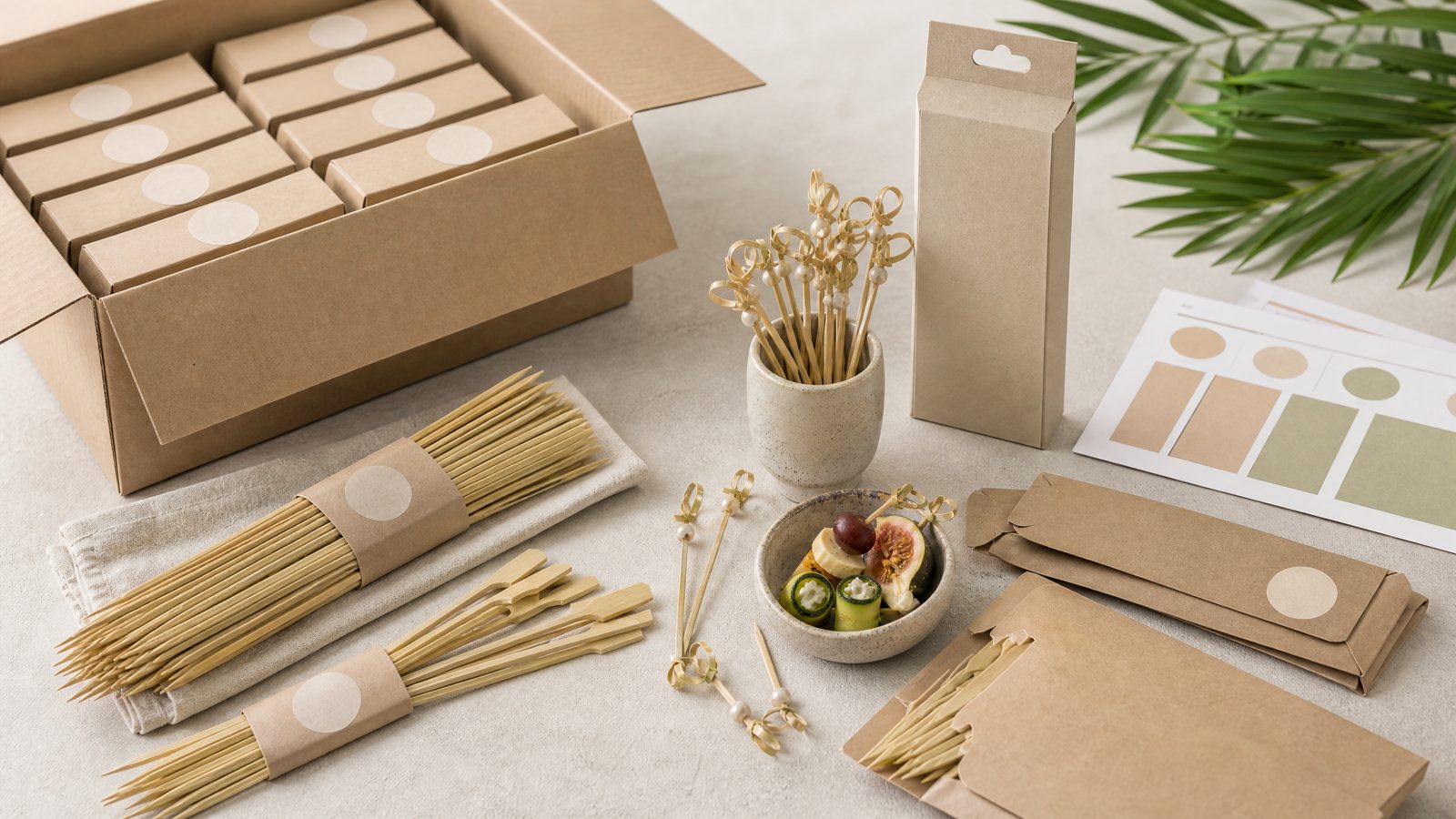
Menu format decides the family before price does. A takeaway noodle box needs reach, a dessert counter needs a small bowl, and a bakery window needs something that photographs well under a cake. The mapping below covers the short forks, standard spoons and sporks we produce, and the service occasion each one is specified for.
| Format | Typical size | Material | Best-fit occasion |
|---|---|---|---|
| Wooden fork | 185 × 27 × 1.7 mm | Birch | Takeaway mains, salads, rice bowls |
| Wooden knife | 160 × 22 × 1.6 mm | Birch | Cutlery sets, delivery combos |
| Ice cream spoon | 75 mm | Birch | Gelato cups, dessert sampling |
| Wooden cone | 125 mm | Poplar | Fries, snack cones, street food |
| Wooden boat | Small size | Poplar | Food-hall serving trays, tasting portions |
| Heart-shaped plate | Heart-shaped plate | Poplar | Bakery, patisserie, gifting |
| Mousse box | 40 mm | Poplar | Mousse, panna cotta, small desserts |
| Stir sticks | 90 mm / 110 mm | Birch / bamboo | Coffee bars, ice cream unions |
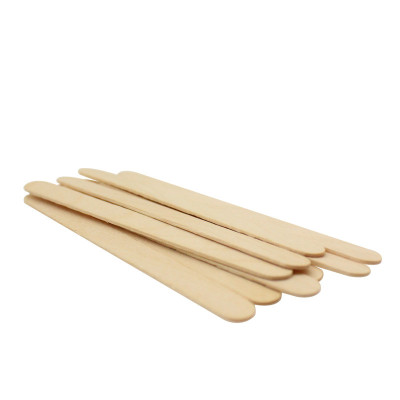
| Popsicle sticks | 93 × 10 × 2 mm / 114 × 10 × 2 mm | Birch | Ice cream production, craft use |
The practical rule is to fix the format list before fixing the artwork. Every extra length or shape in a private-label range adds a mould run, a print plate or a die, and those setup costs are charged once per format rather than once per order. Buyers who consolidate a menu into three formats instead of seven usually reach a lower landed cost on the same volume. A delivery menu built around the 185 mm fork, the 160 mm knife and a two-piece cutlery set is the common shape of that consolidation.
Range consolidation also simplifies the second order. Each format carries its own carton count, pallet pattern and quality acceptance sheet, so a seven-format range means seven sets of documents to re-approve on every repeat. Cutting to three formats reduces the approval work by the same proportion, and the warehouse team stops splitting small quantities across bins.
Seasonal menus need one extra decision. A summer dessert launches for ten weeks, which is shorter than a full production window, so the format has to come from an existing mould rather than a new one. Ask which lengths are already tooled before the menu is designed, and the launch date stops depending on tooling lead time. Existing stock covers a wide range already: 125 mm cones, 55 mm heat-resistant cups and 40 mm mousse boxes are all tooled today.
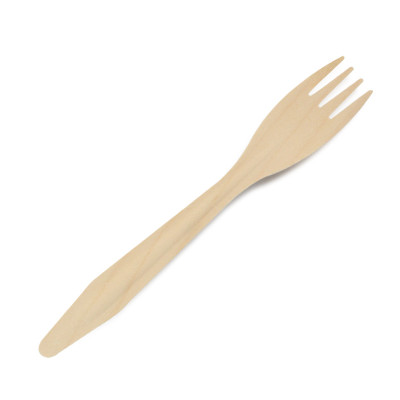
Two formats deserve separate attention. The 185 mm disposable wooden fork is the workhorse for delivery and takeaway because 27 mm of head width lifts a full bite, and the 160 mm wooden knife pairs with it as a set for combo meals. For dessert programmes, the 75 mm ice cream spoon matches a standard gelato cup without the handle protruding, and the small wooden boat does the same job for tasting portions.
What Do Grams per Piece and Wall Thickness Actually Change?
Two items can share a catalogue length and behave completely differently on the table. Thickness in millimetres decides stiffness, width decides payload, and piece weight in grams decides both the freight bill and the feel in the customer’s hand. This is the section most RFQs skip, and it is the one that generates the complaint list six weeks after delivery.
Stiffness rises steeply with thickness rather than linearly, which is why the difference between a 1.2 mm and a 1.6 mm spoon is felt immediately. Short dessert spoons such as the 75 mm ice cream spoon at 1.2–1.4 mm carry light loads over a short distance from cup to mouth, so the thinner profile is sufficient. Forks and knives that lever against a container wall need 1.6 mm or more, and the 185 mm fork at 1.7 mm is specified for exactly that levering load. The 185 mm spoon carries the same convention at the other end of the range.
Weight is the commercial half of the same decision. Cartons are costed and stacked by carton weight in kilograms, and freight is billed on chargeable weight, so an extra 0.2 mm of thickness across a full container becomes a real budget line. Ask for grams per piece and carton gross weight together, because a supplier who quotes only length is quoting a shape, not a specification. Open any popsicle stick listing that shows both dimensions and you can see the difference between a data sheet and a photograph.
Surface finish deserves a line in the same sheet. A sanded edge on the mouth-facing part of a spoon or fork reduces splinter risk without changing thickness, and hot-stamped logos sit more cleanly on a smoother face. Buyers comparing two suppliers at identical dimensions should compare the finish, because that is where a lower price is usually taken out.
A Worked Thickness Check
Take a delivery account running 200,000 sets a month with a fork and knife per set. Moving the 160 mm knife from 1.5 mm to 1.6 mm adds stiffness the customer can feel but also adds weight to every carton. Multiply the weight delta by 200,000 and by the chargeable freight rate, then compare that annual figure against the value of fewer breakage complaints. That comparison, not the unit price, is the actual specification decision.
Note on tolerances: Published figures in this article come from our current product data. Tolerances on machined wood vary by format, and the exact acceptance range should be written into the purchase order rather than assumed from a catalogue page.
Wood, Bamboo or Bagasse: Which System Should You Specify?
Material comparison is usually framed as a sustainability question, but the operational answer is different. Each system carries a different tooling cost, a different failure mode and a different end-of-life claim, and a buyer who chooses on aesthetics alone pays for it in change-management cost later.
| Criterion | Birch / poplar wood | Bamboo | Bagasse moulded fibre |
|---|---|---|---|
| Forming method | Machined or press-formed | Machined, strip-formed | Wet-pulp moulded |
| Typical cutlery thickness | 1.2–1.7 mm | Comparable to wood | Thicker profile for equal stiffness |
| Heavy-load feel | Rigid at 1.6 mm and above | Rigid, slightly springier | Good for plates, weaker for thin cutlery |
| Surface and print | Hot-stamp logo standard | Hot-stamp logo | Print on moulded surface |
| Best-fit formats | Cutlery, plates, boats, cones, boxes | Stirrers, picks, skewers | Plates, clamshells, trays |
| Main operational risk | Moisture absorption if stored badly | Splitter on thin ends | Tooling cost on short runs |
| End-of-life claim | Biodegradable per our product data | Biodegradable | Compostable, dependent on facility |
Wood wins where the customer touches the item and judges it by feel, which is why 160 mm wooden spoons dominate dessert service. Bamboo wins on thin, long, cheap items such as bamboo chopsticks and cocktail skewers, where a strip-cut profile is efficient. Bagasse wins on wide formats such as plates and trays, where wet-pulp moulding produces a large shape in one press. Most serious operators run two systems rather than one, and the split usually follows that logic rather than a brand preference.
Switching cost is part of the choice. Moving a menu from bagasse plates to wooden plates changes the plate depth, the stacking height and therefore the shelf and warmer fit in the outlet. Moving only cutlery from plastic to birch keeps the plate system untouched and is the cheaper first step, which is why most operators start with a wooden cutlery set and extend to rectangular plates later.
What Does FSC Certification Cover, and What Does It Not?
FSC is a chain-of-custody claim about the fibre, not a safety or performance claim about the finished item. When a supplier says “FSC certified”, the useful follow-up question is which certificate scope covers your specific order, because certification sits with the facility and the product group rather than with the words on the invoice.
Our range lists six credentials across the product data: FSC, LFGB, BRC, BSCI, SGS and FDA. Those six answer different questions. FSC answers where the fibre came from, LFGB and FDA answer food-contact suitability for the EU and US markets, BRC answers factory hygiene systems, BSCI answers social compliance, and SGS covers third-party testing. A buyer who needs all six for a European retail listing should ask for the current documents rather than the certificate numbers alone, and check that the scope names the exact format being quoted — the 40 mm mousse box and the 185 mm fork are separate product groups.
The limits matter too. An FSC claim does not by itself make an item compostable in a specific municipal facility, and it does not substitute for market-specific packaging and labelling duties, which differ by country. Where a destination market’s rule is not confirmed for a given format, we mark it as pending confirmation rather than assert compliance, and the same standard should be applied to any supplier’s claim.
Documentation maintenance is the part buyers forget. Certificates have expiry dates, and a retail listing approved in spring can be challenged in autumn if the file on record has lapsed. Put a review date for the certificate set next to the review date for the price list, and the listing stops depending on someone’s memory. The same discipline applies to the FAQ and document page your buyers read before they contact you.
For private label, ask who holds the certificate that appears on the pack. If the claim is carried by the manufacturer’s chain of custody, the wording on the pack has to match that scope, and the approval should be confirmed in writing before print plates are cut.
How Should You Plan MOQ, Lead Time and Carton Logistics?
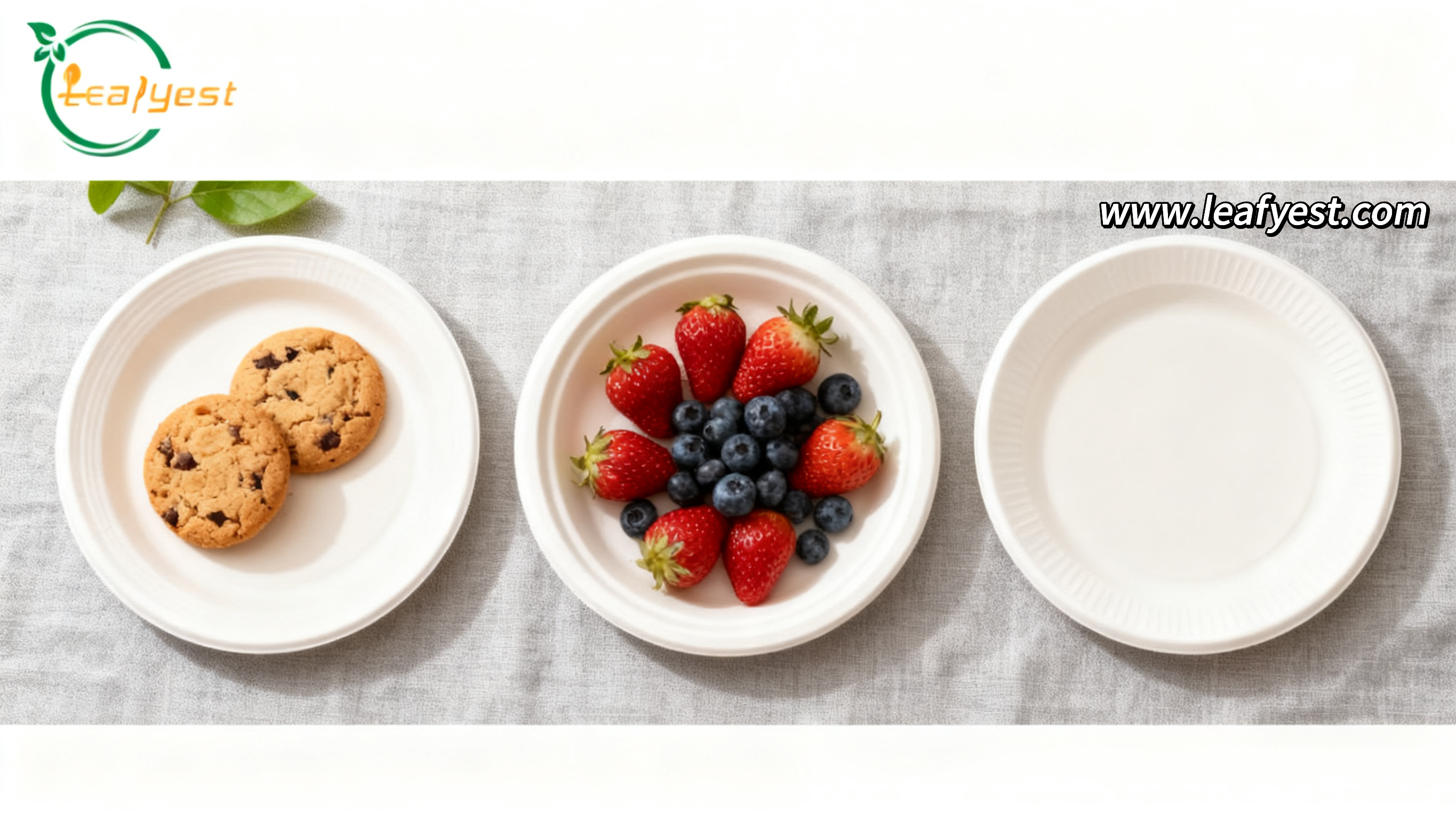
Minimum order quantity is set by raw-material run length, tooling setup and packaging minimums, not by goodwill. Stock formats carry the lowest thresholds; a private-label set with a printed sleeve carries the higher one, because the inner pack can bind before the piece count does. Ask for MOQ separately for stock packaging and for custom packaging, then plan the first order against the lower of the two. A stock 90 mm stir stick and a printed private-label small boat will always land at different thresholds.
Lead time is where most forecasts break. Buyers assume lead time equals production time, but sampling, tooling and print approval sit in front of production and usually take longer. Our standard production lead time is 35–45 days from approval of the detailed drawings, and that clock starts at drawing approval rather than at inquiry. Sampling for a new custom format, tooling for a new shape and artwork approval for hot-stamp logos all run ahead of that window and are quoted separately.
Carton logic follows from the earlier thickness discussion. Cutlery is packed in defined counts per carton, cartons are palletised to a fixed layer pattern, and the pallet count decides how much of a container the order actually fills. An order that is cheap per piece but only fills 60% of a container is expensive per delivered unit, so the carton and pallet maths belongs in the same sheet as the unit price.
Storage conditions belong in the plan as well, especially for the wooden cups and boats that carry liquid contact. Wood absorbs moisture, so a carton left on a damp loading dock or in an unheated external store can arrive with dimensional movement and a warp that no factory inspection would have caught. Specify dry, off-floor storage in the delivery terms, and the claim rate on arrival drops without any change to the product.
Finally, plan the repeat order before the first one ships. A second run against existing tooling and approved artwork is a much shorter exercise than the first, so the buyer who books the repeat date at first shipment keeps shelf continuity instead of facing an avoidable gap.
Run length
MOQ tracks the efficient raw-material batch, so consolidation across formats lowers the entry point.
Clock start
Production runs 35–45 days from detailed drawing approval; sampling and tooling sit before it.
Container fill
Pallet pattern decides fill rate; a 60%-full container raises cost per delivered unit.
How Do You Qualify a Wooden Tableware Supplier?
Qualification is a document and sample exercise, not a factory-tour impression. The fastest screen is to ask three questions in the first email: which certificates are current for the exact product group, what the tolerance range is on the dimensions quoted, and what happens if a carton arrives above the agreed gross weight.
The second screen is the sample itself. Ask for three pieces from the same production run, not one hand-picked piece, then break one deliberately. A 185 mm fork that snaps at the neck under normal load indicates a thickness or grain-direction problem that no certificate will reveal. Check the machined edge too, because a rough edge on the part that touches the mouth is a food-contact and complaint issue rather than a cosmetic one.
The third screen is administrative and often decisive: does the supplier answer with a written specification sheet, or with a photograph and a price? Buyers who work with a manufacturer that owns its factory get a spec sheet, a drawing approval step and a named contact for deviation claims. That structure is what separates a trading intermediary from a producer, and it becomes visible within two emails.
Use one sample enquiry across three suppliers to run this screen. Send the same format list and the same tolerance question to each, then compare what comes back. Suppliers who answer with dimensions, carton weights and certificate scope in writing are working from production data; suppliers who answer with a price and a promise are working from a template. Compare that reply against the published format list and the gaps become obvious.
Need current specs and a quotation?
Send your format list, destination market and target volume, and our team will return the dimensions, carton weights and certificate documents for each item before any tooling is discussed.
Request a tableware quotationWhich Standards Apply to Food-Contact and Packaging Claims?
Three standard families come up in almost every tableware specification meeting, and each has a defined scope. LFGB is the German food and feed code covering food-contact materials, and FDA rules govern food-contact articles in the United States; both are listed against every product page in the tableware range. BRC is a factory-level food safety system standard, and BSCI covers social compliance auditing rather than product safety.
Where a buyer references a fire-performance or fire-door standard such as BS 476 or EN 1634, or an accessibility standard such as ADA, those standards belong to building products and accessible design, not to disposable wooden tableware. The relevant distinction is scope: BS 476 and EN 1634 test fire resistance and door assemblies, and ADA covers accessible design requirements. None of them define a requirement for a wooden fork, spoon or plate. If a tableware RFQ arrives quoting one of these, the clause has usually been copied from a building specification and should be replaced with the food-contact standards that actually apply.
Those building standards do have a legitimate home elsewhere in our group. BLOSSOM CHEER, a custom door and window manufacturer, works on door and window systems with 30+ years of manufacturing experience, an own factory, OEM and ODM customisation, and a 35–45 day delivery window counted from approved shop drawings. Any Rw value, fire rating or accessibility claim for those products is confirmed against the project drawing set rather than quoted from a general article.
For tableware, the honest compliance statement is narrow and specific: current certificates on file for the product group, food-contact suitability confirmed for the destination market, and any market-specific labelling duty confirmed in writing. Anything beyond that should be marked pending confirmation until the document exists.
Why Buy From a Manufacturer With Its Own Factory?
The practical difference between a factory and a trading company appears at three moments: when a drawing needs changing, when a carton deviates, and when a repeat order has to match the first run exactly. A manufacturer with its own presses and machining lines absorbs those moments inside one organisation, while a trader has to relay them and loses days each round.
OEM and ODM are both accepted across our range, and hot-stamp logo branding is the standard decoration method on plates, boats, cups and spoons. Because the same facility runs the tooling, a change in logo position or a new length in an existing family is a drawing revision rather than a new supplier onboarding. That is also why the 35–45 day production window is counted from drawing approval: it is the point at which both sides have frozen the same dimensions.
Our own tableware operation is described on the company page, and the full format list is published in the product range so buyers can check dimensions before making contact. Independent buyers who benchmark those pages against a supplier’s quotation learn quickly which numbers are stable and which were written for the occasion.
Tooling ownership is the question to settle at contract stage. When the mould or print plate is paid for by the buyer, the buyer should confirm in writing where it is stored and whether it can be moved. That single clause protects a private-label range from becoming stranded if the relationship changes, and it matters most on long-running lines such as mousse boxes and cones.

How Do You Build an RFQ That Gets a Usable Quote?
An RFQ that produces comparable quotes carries five fields: format and dimensions in millimetres, material, branding method, target volume per format per month, and destination market with Incoterm. Use the published popsicle stick and stir stick data as the template for how much detail a specification sheet should carry. Anything missing from that list will be filled in differently by each supplier, which makes the returned prices incomparable even when they look similar.
Add the acceptance criteria as well. State the thickness with a tolerance, the logo position with a reference drawing, the carton gross weight limit and the label content. Suppliers quote what they are asked for, so a loose RFQ produces a loose offer and a change order later. The buyers who move fastest are the ones whose first email already looks like a purchase order.
Finally, ask for the sampling and tooling cost separately from the piece price. Separating those lines lets you compare a stock-format trial against a custom run on the same basis, and it exposes quotes that hide setup cost inside an inflated unit price. It also gives you a clean number to revisit on the second order, when the tooling already exists.
Keep the RFQ on one page. A long document invites a long reply that answers the wrong questions; a single page with five fields and one tolerance column usually comes back complete. If a supplier returns an incomplete answer to a one-page RFQ, that is the first data point about how the order will be managed.
What is the minimum order for FSC disposable wooden tableware?
Minimums are set per format by raw-material run length, tooling and packaging. Stock formats carry the lowest thresholds, and private-label formats with printed sleeves carry higher ones. Request MOQ separately for stock and custom packaging before committing to a volume.
How long does production take?
Standard production lead time is 35–45 days from approval of the detailed drawings. Sampling, new-shape tooling and logo artwork approval run ahead of that window and are quoted separately.
Is FSC certification the same as compostability?
No. FSC covers chain of custody for the fibre. End-of-life behaviour depends on the material and on local processing facilities, so the claim has to be checked against the destination market before it is printed on packaging.
Can the logo be customised?
Yes. Hot-stamp logo branding is the standard method across plates, boats, cups and spoons, and OEM and ODM projects are accepted across the range. The cutlery set page shows how branded sets are configured.
Do you also supply building products?
Not in the tableware range. Door and window systems are handled separately by BLOSSOM CHEER, a custom door and window manufacturer, with its own factory and 30+ years of experience in that field.