FSC Disposable Wooden Tableware: What "FSC-Certified" Really Means
FSC Disposable Wooden Tableware: What "FSC-Certified" Really Means
"FSC-certified" is one of the most repeated phrases in sustainable foodservice packaging, and one of the most misunderstood. For buyers specifying FSC disposable wooden tableware, the label is not a single claim about a product — it is a chain-of-custody statement about where the wood came from and how it moved through the supply chain. This guide explains what FSC actually certifies, the difference between FSC 100%, FSC Mix and FSC Recycled, what the label does and does not guarantee, the documents to request before ordering, and how FSC fits alongside food-contact, performance and end-of-life standards in a complete specification.
What FSC Certification Actually Certifies
The Forest Stewardship Council (FSC) is an independent, non-profit organisation that sets standards for responsibly managed forests. Two separate things carry the "FSC" name, and buyers routinely confuse them.
Forest Management (FM)
Certifies that a specific forest is managed to FSC's environmental, social and economic standards. This applies to the forest, not the factory.
Chain of Custody (CoC)
Certifies that certified material is tracked and controlled from the forest through every processing and trading step to the finished product.
Product Label
The logo you see on packaging is the visible end of a CoC system. It is only valid when the certificate holder's scope covers that product.
For a disposable wooden fork, plate or coffee stirrer, the relevant credential is the manufacturer's Chain of Custody certificate. That certificate lists a legal company name, a certificate code, a validity period and — crucially — a scope describing which product categories and processes it covers. A certificate that does not list your product category, or that has expired, does not support an FSC claim on that product.
It is also worth separating the certification of the processor from the certification of the raw material. A factory can hold a valid CoC certificate while buying from multiple timber sources, some certified and some not, depending on the claim type it chooses to operate. That is why the operational question for buyers is never simply "are you FSC certified?" but "which claim type applies to this SKU, and how will you document it for this order?" Our FSC disposable wooden tableware catalogue answers that question at product-group level, so you can map each range to the claim it actually carries.
FSC 100%, FSC Mix and FSC Recycled: The Three Claim Types
Not all FSC labels mean the same thing. There are three distinct claim types, and the difference matters when you write a specification or a marketing claim.
FSC 100%
All the wood or fibre in the product comes from FSC-certified forests. This is the strongest claim and the easiest to communicate. It is also the hardest to guarantee at scale for low-cost, high-volume disposable items, because certified feedstock supply is finite and command a price premium. If a quotation promises FSC 100% across a very large line at unusually low cost, ask to see how the certified volume is balanced.
FSC Mix
The product combines FSC-certified material with controlled wood and/or recycled material, managed under a credit or percentage system defined by FSC. This is by far the most common claim for disposable wooden tableware, cutlery, plates, cups and ice cream sticks. It is legitimate and auditable — but it does not mean "100% from certified forests," so never let a supplier imply otherwise. If your tender requires a specific certified-input share, state the percentage explicitly in the specification.
FSC Recycled
All the wood or fibre is reclaimed or recycled material. This supports circular-economy messaging, but for food-contact disposable tableware the recycled-input route is less common and requires careful food-safety documentation, since the feedstock history is harder to control than virgin certified wood.
When you compare suppliers, ask which claim type applies to the exact SKU, not to the company in general. A single factory may hold one certificate covering several claim types across different product lines. Our FSC disposable wooden cutlery and FSC disposable wooden plates ranges both state the applicable claim type at SKU level, which makes side-by-side comparison straightforward.
A Quick Way to Remember the Difference
FSC 100% describes the input (all certified forests). FSC Mix describes a mix of certified, controlled and/or recycled input. FSC Recycled describes recovered input. Only the supplier's certificate scope and batch documents tell you which one applies to your order.
What the FSC Label Does Not Guarantee
Misreading the label is the single biggest source of compliance risk in this category. FSC certification is not:
- A compostability or biodegradability claim — those require separate standards such as EN 13432 or ASTM D6400.
- A food-contact safety approval — that is governed by FDA 21 CFR or EU Regulation (EC) No 1935/2004, not by FSC.
- A guarantee the product is plastic-free — coatings, inks or adhesives may still contain synthetic polymers.
- A recyclability promise — local recycling systems decide what is actually recyclable.
- A performance or durability standard — strength, heat resistance and oil resistance are separate technical properties.
- A labour or social-audit certificate for the whole factory — FSC addresses forest management and wood traceability, not every social-compliance topic.
Treat FSC as one verifiable element in a specification, alongside food-contact compliance, performance testing and end-of-life claims. The strongest purchasing briefs list all four separately, and ask for evidence for each.
How to Verify an FSC Claim Before You Buy
Verification takes minutes and protects you from greenwashing. Run these five checks on every new supplier or SKU.
Check the certificate code
Ask for the Chain of Custody certificate and confirm the code is valid and in date on the FSC public certificate database. Expired certificates are a common red flag.
Match the legal entity
The name on the certificate must match the entity on your invoice and packing list. Trading names and sister companies can hide a mismatch.
Confirm the scope covers your product
The certificate scope must explicitly include the product category and process (for example, wooden disposable cutlery). A general "wood products" scope may not cover tableware.
Ask for batch-level documentation
Request the chain-of-custody paperwork linking your shipment to certified inputs. This is what turns a company-level claim into an order-level claim.
Verify label-use permission
If you plan to print the FSC logo on your own packaging, confirm the certifier has approved your label artwork under FSC trademark rules.
If a supplier cannot supply items 1 to 4 for the exact SKU within a reasonable timeframe, treat it as a reason to keep looking. Documentation is not paperwork for its own sake — it is what lets you claim responsible sourcing credibly in tenders, retail listings and corporate reports.
Why FSC Matters More for Disposable Wooden Tableware
Wooden disposable tableware occupies an unusual position: it is marketed on its environmental story, so the credibility of that story is the product. Cutlery, plates, boats, cups and ice cream sticks are single-use items sourced from tree-based material, which makes responsible forest sourcing the core of the sustainability argument. A wooden fork without a traceable wood source is a hard sell to any buyer with a procurement policy.
For B2B buyers, the practical benefits are threefold: alignment with corporate sourcing policies that mandate certified wood and fibre; reduced reputational and legal risk linked to illegal logging or poor labour practices in the supply chain; and credible differentiation in tenders and retail listings where responsible sourcing is scored. In markets where public buyers now require sustainability reporting, a documented FSC claim is often the fastest way to satisfy a "certified timber" line item without redesigning your packaging.
Matching claim type to product family
Different disposable wooden items suit different claim types. High-volume cutlery and stirrers are most commonly supplied as FSC Mix, because certified feedstock at that scale is limited. Premium plates and serving formats more often support a stronger claim where the buyer is willing to pay for it. Ice cream sticks and coffee stirrers sit in a middle band where the claim depends heavily on the mill the wood comes from. Browse the full range in our FSC disposable wooden tableware catalogue, then compare against the FSC wooden cutlery line before you finalise a specification.
A Common Mistake to Avoid
Writing "100% FSC" or "FSC-certified and fully compostable" in a tender response without a matching certificate and test report is an enforcement risk in the EU, UK and US. Keep each claim separate, and only use wording your documentation actually supports.
FSC in Context: The Other Certifications You Still Need
A complete disposable tableware specification usually stacks FSC with three other families of proof. FSC covers sourcing; the rest cover safety, performance and end-of-life.
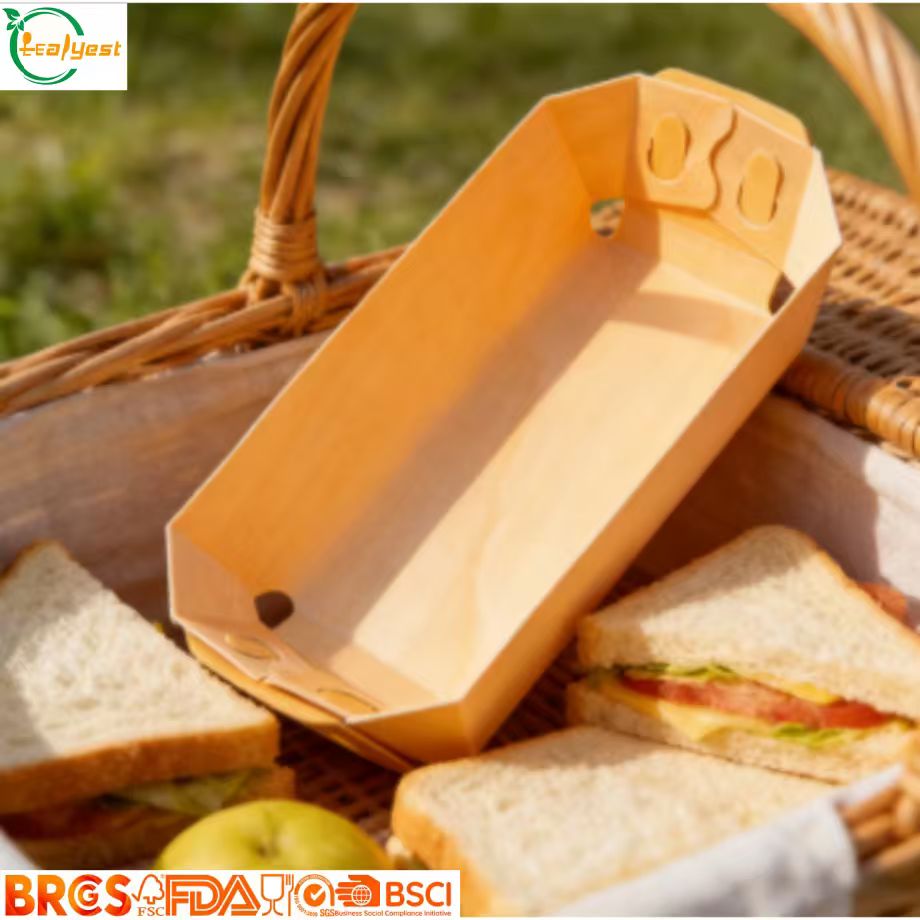
Food-contact compliance (FDA 21 CFR, EU 1935/2004), performance testing (heat, oil and load resistance) and end-of-life standards (EN 13432, ASTM D6400) each require their own accredited test reports tied to the finished, coated and printed article. Requesting them together with the FSC certificate shortens approval cycles, because your QA and compliance teams can review one complete document set rather than chasing missing items across several emails.
It also helps to know which claims you intend to make before you brief a supplier. If your packaging will say "compostable," your specification must call for the matching test; if your tender mentions "FS C certified," your specification must name the claim type and the required proof. For a full walk-through of how these fit together in a purchasing process, see our complete B2B buyer's guide to FSC disposable tableware, and for the document checklist per order, keep this article as the companion reference.
Ready to verify an FSC wooden tableware specification?
Send us the SKU and target market, and we will return the applicable claim type, the current chain-of-custody certificate and the food-contact documentation for your review.
Request FSC documentation →Short FAQ: FSC and Disposable Wooden Tableware
Q1 — Does FSC-certified mean the product is compostable?
No. FSC certifies responsible forest sourcing and traceability. Compostability is a separate performance claim demonstrated by standards such as EN 13432 or ASTM D6400.
Q2 — Is FSC Mix inferior to FSC 100%?
It is a different claim, not a weaker-quality product. FSC Mix combines certified material with controlled and/or recycled content under an audited system. FSC 100% means every fibre is from certified forests.
Q3 — How long is an FSC Chain of Custody certificate valid?
Usually five years, subject to annual surveillance audits. Always confirm the certificate is current on the date of your order, not the date of your enquiry.
Q4 — Can I print the FSC logo on my own private-label packaging?
Only with approval from the certification body under FSC trademark rules. Submit your artwork to your supplier and certifier before printing — unapproved logo use is an enforcement issue.
Q5 — How do I know which claim type applies to my order?
Ask the supplier to state the claim type in writing for the exact SKU and to provide the chain-of-custody document that supports it. The company certificate alone is not enough.
Q6 — Does FSC cover the whole factory, or just the wood?
Chain of Custody certification covers the wood and fibre itself as it moves through the supply chain, not general factory conditions. Ask separately about quality, environmental and social audits if your policy requires them.
Q7 — Can I claim both FSC and biodegradable on one package?
Only if you hold supporting evidence for both, and only if each claim is worded precisely for your market. Combined slogans such as "100% FSC biodegradable" usually overstate at least one part of the claim.
Q8 — Do smaller MOQ orders still get FSC documentation?
Documentation should accompany any order carrying an FSC claim, regardless of volume. If a supplier will only provide batch documents above a certain volume, agree that threshold in writing before you commit.
Next Steps for Buyers
If you are specifying FSC disposable wooden tableware, start by requesting three documents for the exact SKU: the current Chain of Custody certificate, batch-level documentation, and the accredited test reports for food contact and any end-of-life claim. Then compare suppliers on how clearly they answer, not only on price.
Request a certificate and sample pack
Ask for finished pre-production samples plus the current FSC certificate and recent lab reports for the printed and coated SKU.
Review the FSC wooden tableware range
Browse the FSC disposable wooden tableware catalogue to match claim type and format to your menu, then cross-check with the FSC disposable wooden plates and FSC wooden cutlery lines.
Start a technical enquiry
Use our contact form to send your specification and request verified documentation for your target market.
Get your FSC wooden tableware specification confirmed
Tell us your formats, volumes and destination market, and we will map each SKU to its claim type with the supporting certificates attached.
Start your enquiry →Leafyest manufactures FSC disposable wooden tableware, cutlery, plates, cups and ice cream sticks for foodservice, catering and private-label buyers. Every claim we make is backed by documentation you can verify — because "FSC-certified" should mean something specific, not just something printed.