FSC Disposable Wooden Tableware: How to Build a Carry-Out Set That Actually Works
FSC Disposable Wooden Tableware: How to Build a Carry-Out Set That Actually Works
We at Leafyest, an FSC disposable wooden tableware manufacturer, publish the format-selection method our own engineers use: match every dish on your menu to one tray or plate footprint, one cutlery length and one packaging format — then test the whole set under real serving conditions before you commit to volume.
Quick Answer: Build your FSC disposable wooden tableware set from the menu backwards, not from the catalogue forwards. Fix the tray footprint first, then the plate size that fits it, then the cutlery length your portions actually need. Three decisions — footprint, depth and cutlery length — set whether a set performs or collapses in the customer's hands. Everything else, from wood species to logo placement, is a refinement on top of those three.
What Formats Does FSC Disposable Wooden Tableware Actually Cover?
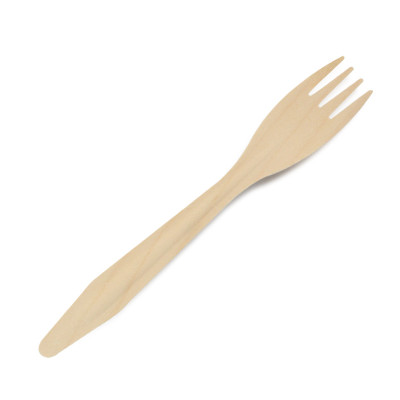
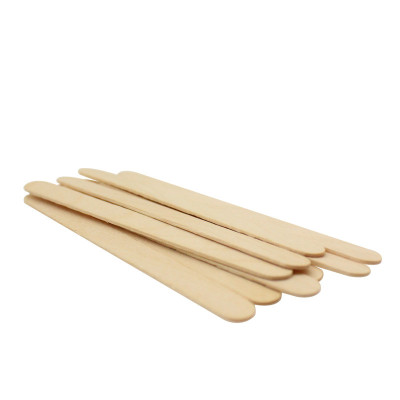
A full FSC disposable wooden tableware range is broader than the four items most buyers picture. We manufacture and export across six families: plates and trays, boats and cones, cups and mousse boxes, cutlery and cutlery sets, coffee stirrers and ice cream sticks, and the bamboo sub-range covering skewers, chopsticks and bamboo cutlery.
Each family solves a different serving problem. Plates carry flat and semi-flat food; boats and cones carry loose, wet or handheld food; cups and mousse boxes carry desserts and sauces; cutlery delivers food from container to mouth; stirrers and sticks are accessories that complete a beverage or dessert programme rather than a meal.
The practical consequence is that most carry-out menus need three or four families, not one. A bakery running dessert boxes and coffee also needs stirrers and a small fork. A caterer running hot buffets needs plates, boats and a full cutlery set. Buying from a single manufacturer across those families reduces the number of inbound shipments, artwork setups and approval cycles you manage.

The Format-to-Dish Matrix: Which Wooden Format Fits Which Food?
Start with the dish, not the format. The table below maps common carry-out and catering dishes to the wooden formats that physically suit them, with the constraint that usually decides the choice.
| Dish type | Recommended format | Deciding constraint | Watch out for |
|---|---|---|---|
| Pastries, cake slices, small desserts | Small or medium wooden plate; heart or petal shape for gifting | Plate must sit flat inside the box without sliding | Rim depth too shallow for cream-based items |
| Salads, grain bowls, poke | Wooden boat, medium or large | Side-wall height versus total portion volume | Sauce migrating through the end fold on long deliveries |
| Ice cream, gelato, frozen yogurt | Wooden cup or mousse box plus a short spoon | Spoon length relative to cup depth | Spoon too short to reach the bottom without fingers touching food |
| Street food, skewers, takoyaki | Wooden boat plus bamboo skewer or food pick | Boat length versus skewer overhang | Skewer protruding past the lid line |
| Hot noodles, rice, curry | Deep wooden box or large boat plus long spoon or spork | Wall thickness and heat tolerance under sustained contact | Thin walls softening under very hot, high-moisture food |
| Coffee, tea, tasting flights | Wooden coffee stirrer, square or round end | Stirrer length versus cup height | Stirrer too short to reach liquid in a tall cup |
| Ice cream bars, frozen novelties | Bevelled, straight or magnum ice cream stick | Stick width versus mould slot | Stick thickness versus the mould's ejection force |
| Fruit platters, appetiser service | Wooden fruit fork or bamboo food pick | Tine length versus fruit firmness | Tines bending on dense fruit such as melon |
Read the table as a starting filter, not a final answer. Two dishes in the same row can still need different formats once portion size and delivery time enter the picture. A 180 g salad and a 450 g salad both map to "wooden boat," but only one of them will survive a 25-minute scooter ride in a medium boat.
Send Your Show Spec
Tell us your menu, portion weights and delivery format, and we will map every dish to a specific plate, boat, cup or cutlery length from our range.
Send Your Show SpecPlate Formats: Round, Square, Rectangular, Heart, Petal
Shape is a presentation decision with a logistics consequence. Round plates nest and stack predictably and are the safest default for high-volume catering. Square and rectangular plates maximise usable surface inside a rectangular box, which matters when the box is the delivery unit. Heart and petal shapes sell gifting and celebration occasions but waste corner space in a box and cost more per usable square centimetre.
Our wooden plate range covers small round, medium round, large round, small square, two medium square profiles, rectangular, petal and heart shapes, pressed from poplar wood. One confirmed dimension in our published data is the heart-shaped plate at 135 × 137 × 14.5 mm. Other plate dimensions are listed by size band rather than millimetre figures in our current data and should be treated as to be confirmed until you receive a spec sheet.
Rim depth is the number buyers overlook. A 14.5 mm rim on a small plate is generous and holds a cream dessert; a near-flat plate of the same footprint cannot. Ask for rim depth in millimetres, not adjectives.
The stacking test: request 20 plates and stack them. If the stack leans or the plates bind, your line staff will fight them at peak service. Stackability is a factory property, not a warehouse afterthought.
Building a mixed menu? Our full FSC range lists every format with its published specification, so you can compare footprints before requesting samples.
Boats and Cones: The Wet-Food Formats
Wooden boats exist because flat plates fail at wet, loose or handheld food. A boat's side walls contain sauce, the wall length accommodates a skewer, and the open top lets steam escape so fried food does not go soft. We press boats from poplar wood in small, medium and large size bands, with a crown-profile variant used for catering and dessert service.
Cones solve a narrower problem: single-portion handheld food that a customer eats while walking. They suit fries, snack mixes and small dessert portions, and they pair naturally with a paper sleeve or a wooden holder. Our wooden cone range is sized for single-portion service. The constraint is depth versus stability — a tall narrow cone tips easily on a tray, so tray geometry has to be designed around it.
For both boats and cones, ask two questions before ordering: what is the wall thickness, and how is the end fold sealed? These two answers decide whether the format survives a delivery run or leaks at minute fifteen.
Cutlery Length: The Most Common Sizing Error
Cutlery is where carry-out programmes lose the most goodwill. A fork that is 10 mm too short forces a customer to push their fingers into the food; a spoon that is 20 mm too long does not fit the lid recess. The correct length is derived from the container depth plus a grip allowance, not chosen from a catalogue page.
Our birch wood spoon range spans 96 mm, 100 mm, 110 mm, 140 mm, 160 mm, 185 mm and 200 mm, with the 160 mm spoon confirmed at 160 × 34 × 1.6 mm. That spread is not decorative: it maps to different container depths and different service occasions. A 96 mm spoon belongs in a small dessert cup; a 200 mm spoon belongs in a deep noodle bowl.
Cutlery sets change the calculation. A 2-in-1 knife-and-fork kit packed at 500 sets per carton is efficient for logistics but forces a single length on both tools. A 3-in-1 set adds a napkin or a spoon and increases the packed volume per cover, which changes your carton count for a given event size.
| Cutlery length | Typical container pairing | Service occasion | Notes |
|---|---|---|---|
| 96 mm | Small dessert cup, mousse box | Tasting, sample service | Shortest spoon in our range |
| 100–110 mm | Small cup, ice cream tub | Café, gelato counter | Check grip clearance on deep cups |
| 140 mm | Standard boat, medium plate | Casual catering, food truck | Good compromise length for mixed menus |
| 160 mm | Standard takeaway box, medium boat | Delivery, buffet | Confirmed at 160 × 34 × 1.6 mm |
| 185 mm | Large boat, deep box | Full meal delivery | Needs a longer sleeve or wrapper |
| 200 mm | Deep noodle or rice bowl | Asian hot food, catering | Longest spoon; verify lid clearance |

For a deeper look at how procurement teams compare spoons, forks and knives across suppliers, see our guide to wooden cutlery wholesale selection.
Ask About IP Rating and Lead Time
Send us your container dimensions and annual volume. We confirm the matching cutlery length, MOQ and lead time for your combination in writing.
Ask About Lead TimeWood Species: Birch or Poplar?
Species choice is a performance decision disguised as a cost decision. We use two species across the range: birch for cutlery and spoons, poplar for plates, boats and several dessert formats. The split is not arbitrary.
Birch is denser and takes a smoother machined edge, which is why it suits a spoon bowl that must feel smooth against the mouth. Poplar is lighter and presses well into shallow three-dimensional shapes, which is why it suits plates, boats and moulded dessert containers. Both are finished in natural wood colour with no coating on the food-contact surface in standard formats. For markets that prefer grass-family material, our bamboo cutlery range mirrors the same format logic.
If your market asks for a specific species by name, confirm it in writing on the spec sheet rather than assuming from the product title. Some product names use "birch" and "poplar" interchangeably in trade usage, and your compliance team will want the species stated explicitly.
Certificates and Test Scope: What to Ask For and What It Covers
Our product data lists six credentials across the range: FSC, LFGB, BRC, BSCI, SGS and FDA. Each answers a different buyer question, and conflating them is a common source of compliance surprises.
FSC addresses forest origin and chain of custody: it tells you the wood in the product can be traced to responsibly managed sources. If the claim itself needs unpacking, our explainer on what FSC-certified really means covers the scope language in detail. LFGB and FDA are food-contact material assessments for the European and United States markets respectively. BRC is a food-safety management system standard relevant to how the site is run. BSCI is a social-compliance audit covering labour conditions. SGS is a testing and inspection body, not a standard in itself — the value of an SGS document depends entirely on which test method it reports.
When you request documentation, ask for the certificate number, the issuing body, the validity date and the precise scope statement. A certificate that covers "wooden cutlery" may not cover "wooden plates," and a certificate held by a trading company may not cover the factory that will actually produce your order.
Document request checklist: FSC certificate with chain-of-custody scope and validity date; food-contact test report naming the exact product and the test standard; BRC certificate with site name; BSCI audit report with rating and expiry; and a declaration that the producing factory matches the certified site.
Customisation: Logo, Shape, Size and Packaging
Customisation ranges from near-zero effort to full tooling. At the simple end, a hot-stamped or engraved logo on a cutlery handle or a printed craft-paper sleeve changes brand perception without changing the product. At the complex end, a bespoke shape or a new size requires a press tool, a sampling cycle and a minimum run that justifies the tooling.
We accept OEM and ODM work across the range and lists hot-stamping as the standard logo method on plates, boats, spoons and cups. Custom sizes and custom packing are available on cutlery sets, which are packed at 500 sets per carton in standard configuration. Branded stirrers and ice cream sticks follow the same hot-stamping route — see our coffee stirrer range and ice cream stick range.
Sequence matters. Approve the physical format first, then the surface decoration, then the packaging. Buyers who approve artwork before the format is fixed routinely pay for a second print run when the shape changes.

How Do You Test a Carry-Out Set Before Committing to Volume?
You test it under real serving conditions, not on a table in a showroom. A set that performs in a meeting room can fail on a scooter at 30 km/h in the rain.
Run a structured five-part test with 50 to 100 pieces of each format from the actual production line, not from a hand sample. Record results against pass or fail criteria you set in advance, so the outcome is a decision rather than an opinion.
Load test
Load each format to your real portion weight plus 20 percent headroom. Check rim deflection, base sag and seam integrity after 10 minutes.
Heat and moisture test
Fill with food at your actual service temperature and hold for 30 minutes covered. Check for softening, warping and moisture wicking through the base.
Transit test
Pack the set as a customer would receive it and run a 30-minute simulated delivery with normal vibration and two turns. Inspect for spill, slide and stack collapse.
Handling test
Have staff assemble and close 50 sets at normal service speed. Time the assembly and count rework.
Consumer test
Serve 20 real customers and collect two data points: did the cutlery reach the bottom of the container, and did the plate hold without support.
Request a Sample Set
Tell us the formats you want to test and we will quote a sample run from current production, with the dimensions confirmed in writing.
Request a Sample SetWhat Lead Time and MOQ Should You Plan For?
Before you fix a schedule, it is worth reading our earlier breakdown of MOQ, lead time and certificate scope by product family, because the numbers differ sharply between plates, boats and cutlery sets.
Lead time and minimum order quantity depend on whether your order uses existing formats and stock packaging, or requires new tooling, new artwork or new packing. Stock-format orders move fastest; bespoke shapes and printed packaging add a sampling and approval cycle on top of production.
We quote both figures per order rather than publishing a single number, because two buyers ordering the same product family can face very different schedules. Specific MOQ and lead-time figures for your formats are to be confirmed against your volume, destination and packing requirement.
Plan the approval chain into your calendar, not just production. Artwork approval, physical sample approval and pre-shipment inspection each consume days, and a programme that ignores them usually ships late for reasons that had nothing to do with the factory's line speed.
Request a Product Match
Send us your menu, portion weights and delivery format. We will map each dish to a specific plate, boat, cup or cutlery length from our range and confirm the dimensions in writing.
Request a Product MatchHow Do You Store FSC Wooden Tableware Without Losing Quality?
Wood is hygroscopic: it takes on and releases moisture from the air, and that movement changes dimensions and flatness. Storage discipline protects the flatness you paid for at the press.
Keep cartons closed and off concrete floors, in a dry area away from loading-dock humidity swings. Avoid stacking heavy pallets directly on product cartons, because sustained compression deforms rims over weeks. Rotate stock first-in-first-out, and re-inspect any carton that has been open for more than a few days before it goes to the line. Moulded formats with deeper profiles, such as mousse boxes and wooden boxes, are the most sensitive to compression and humidity, so store them lowest and palletise lightest.
Humidity and temperature limits for long-term storage should be confirmed against your warehouse conditions rather than assumed; the practical rule is to keep the product in the same environment your customers will use it in for at least 24 hours before service.
Need a quote on a specific set? Send your menu and volumes and we will reply with a written format recommendation, MOQ and lead time for your market.
Frequently Asked Questions
Q1 — Is FSC disposable wooden tableware genuinely compostable at home?
Untreated wooden tableware breaks down in a well-managed home compost system, but speed depends on wood thickness, moisture and turning frequency. Thin formats such as stirrers and ice cream sticks decompose fastest. Thicker pressed plates and boats take longer and are more predictable in commercial composting. Confirm the claim your market allows before printing it on packaging.
Q2 — Can one FSC set cover both hot and cold menu items?
Usually not with a single format. Hot, high-moisture dishes need thicker walls and deeper profiles; cold desserts need flatter surfaces and shorter spoons. A practical programme uses two or three formats rather than forcing one. Test the hot format at your real service temperature for 30 minutes before approving it.
Q3 — Does a logo change the MOQ?
Yes, when the logo requires a print plate or a stamping tool. Hot-stamped logos on handles and printed sleeves both add a setup cost and raise the practical minimum run. Ask whether your supplier can apply the logo to stock formats first, then move to a custom run once the design is proven.
Q4 — How do I verify an FSC claim is real?
Ask for the certificate number, issuing body, validity date and the exact chain-of-custody scope. Then confirm the producing factory matches the certified site. A certificate held by a trading intermediary does not automatically cover the factory that will press your order, so request the link in writing.
Q5 — Which cutlery length fits a standard takeaway box?
A 160 mm spoon is the common default for standard takeaway boxes and medium boats; we confirm this format at 160 × 34 × 1.6 mm. Deeper noodle bowls need 185 mm or 200 mm, and small dessert cups work best with 96 mm to 110 mm. Measure container depth before choosing.
Q6 — Should I buy plates and boats from the same supplier?
Yes, where possible. Sourcing multiple families from one manufacturer keeps colour tone and surface finish consistent inside the same bag, and it collapses several approval cycles and inbound shipments into one. Mixed sourcing is only worth it when a specific format is unavailable elsewhere.
Send Your Show Spec
The fastest route to an accurate quotation is a complete brief. Send your menu with portion weights in grams, your delivery or service format, your container dimensions if you already have them, your monthly volume by family, your destination market and the certificates your customer requires.
For FSC scope, food-contact reports and current format dimensions across plates, boats, cups, cutlery and cutlery sets, browse the FSC disposable wooden tableware range. If you already know your menu and want the formats matched to it, tell us what you serve and we will specify the set.
We are Leafyest, an FSC disposable wooden tableware manufacturer based in Hailin, China. We ship FOB Dalian and work with foodservice distributors, dessert and coffee chains, caterers and private-label retailers. Send your specification and we will reply with a written format recommendation and a quotation against your volume.
Ask About MOQ and Lead Time
Tell us the formats and annual volume you need. We will confirm MOQ, tooling requirements and the lead time for your specific combination in writing.
Ask About MOQ and Lead Time