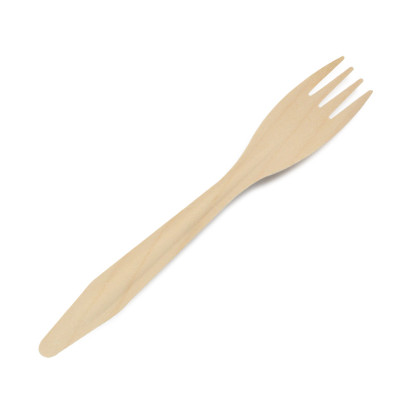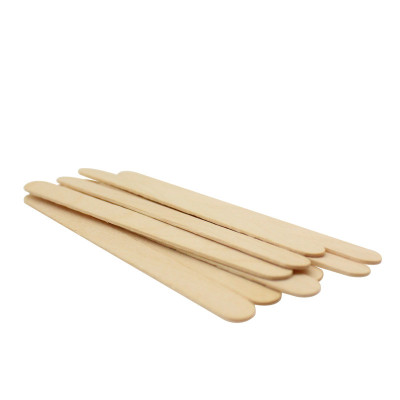
The stick format decides how a bar feels in the hand before a consumer reads the flavour.
Product Specification Guide
Magnum vs. Standard Popsicle Sticks: Choosing the Right Size for Your Ice Cream Line
The magnum vs standard popsicle stick decision is usually made late in product development, after the mould, the fill weight and the packaging are already fixed. That ordering is backwards. Stick format determines how a bar feels in the hand, how it holds together through freezing and coating, and whether it can move through automated insertion at all.
This guide is for ice cream brands, co-packers and foodservice buyers choosing between a standard 93 mm or 114 mm stick and a wider Magnum format. It covers the dimensional differences, what each format is designed to carry, how to test the choice and how to specify it for production.
What the Two Formats Actually Are
A standard popsicle stick — available as bevelled edge or straight edge — is a slim flat stick, conventionally 93 mm or 114 mm long, 10 mm wide and 2 mm thick. It is the default format for ice cream bars, popsicles and much of the craft and food-service market because it suits a wide range of product weights.
A Magnum format stick (see our Magnum wooden ice cream sticks) is wider — typically 17 mm at the widest point, tapering to 11 mm — and is produced in 72 mm and 94 mm lengths. The extra width is the whole point: it distributes load across a broader area of the bar.
Our range covers all four in bevelled edge and straight edge standard formats and the wider Magnum wooden ice cream sticks, so a brand can move between sizes without changing supplier or documentation.
The Engineering Question Behind the Choice
The two formats exist because they solve different mechanical problems, and understanding that makes the selection obvious in most cases.
Load distribution
A wider stick spreads the bending force from a heavy bar across more of the ice cream, so the bar is less likely to pivot, crack or drop off the stick.
Grip surface
17 mm of width gives a noticeably more secure hold for a large bar, and it reads as a premium product in the hand.
Mould compatibility
Stick slot width is set by the mould. A Magnum stick will not fit a mould built for a 10 mm standard stick, and vice versa.
Coating and dipping
Larger bars are often chocolate-coated. The stick must carry the added weight of the coating without flexing during the dip and cooling cycle.
When a Standard Stick Is the Right Answer
The standard format is not the budget option. It is the correct specification for a large share of commercial production.
- Bar weights up to roughly 80–100 g: a 10 mm stick carries this comfortably when the bar is well balanced around the stick line.
- High-volume automated production: standard dimensions are the most widely tooled format, which keeps moulds, feeders and changeover costs lower.
- Multi-flavour portfolios: when the same line runs many SKUs, one stick format across the range simplifies everything downstream.
- Foodservice and catering packs: where portion size is moderate and cost per unit carries more weight — the same logic that governs bulk disposable wooden tableware purchasing.
- Mixed dessert menus: where portion size is moderate and cost per unit carries more weight than hand feel.
- Long-standing product lines: if a product is already specified and selling, changing stick format is a project, not a tweak.
A quick test for standard adequacy
Hold a fully frozen, fully coated sample bar horizontally by the stick and gently rotate your wrist. If the bar holds its angle without visibly flexing at the stick line, the standard format is carrying the load.
When You Need a Magnum Format Stick
- Heavy bars above roughly 100 g: the extra width is the simplest way to stop a large bar from pivoting on a slim stick.
- Thick chocolate coatings: added coating weight increases the bending moment applied to the stick during handling and freezing.
- Premium positioning: the wider stick is part of how an indulgent product communicates indulgence.
- Bars with inclusions or layered centres: uneven mass distribution creates torque that a narrow stick handles poorly.
- Retail multipacks of large bars: where consumer handling before freezing is part of the product's real-world life.
The trade-offs to accept
A wider stick costs more per unit than a standard stick because it uses more material, and it requires moulds tooled for the wider slot. It may also extend the production lead time on a first order if tooling is specific to your bar. For a genuinely large or premium product these costs are normally recovered through reduced defect rates and returns, not through unit economics on the stick itself.
How to Test the Choice Before Committing
- Measure the mould slot firstConfirm the actual slot width in your mould before ordering sticks. This single measurement eliminates most format errors.
- Order a small sample of both formatsA physical comparison on your own product is more informative than any specification table.
- Run a freeze-and-handle testFreeze fully, then handle the bar the way a consumer would — including a horizontal hold and a gentle rotation.
- Test the worst caseUse the heaviest SKU and the thickest coating in your range, not the lightest average product.
- Check insertion on the lineConfirm the stick feeds and inserts cleanly at your actual line speed, not at a demonstration speed.
- Validate storage and transportCheck behaviour after a full cold-chain cycle, including a simulated thaw and refreeze if that is realistic for your market.
Specifying the Stick for Production
Once the format is chosen, lock the specification so future orders behave like the approved sample.
Dimensions and tolerance
Length, maximum and minimum width, thickness and tolerance stated in millimetres.
Edge profile
Bevelled or straight, with the specification naming the exact profile rather than describing it loosely.
Moisture content
An agreed range, since moisture affects both flex behaviour and dimensional stability in a freezer.
Certification and finish
FSC chain of custody, food-contact declaration and a splinter-free surface requirement.
For the certification and supplier-selection side of this decision, see our guide on how to choose a wooden popsicle stick manufacturer, which covers the documentation set, MOQ drivers and lead-time structure that sit behind any format choice.
Frequently Asked Questions
Can a Magnum stick be used in a standard mould?
No. The mould slot is sized to the stick width, so a 17 mm tapered stick will not seat in a slot tooled for a 10 mm standard stick. Mould and stick format must be chosen together.
Is a longer stick stronger than a wider one?
Not in the way that matters. Length changes grip and insertion depth; width changes how load is distributed across the bar. For heavy bars the width is the more effective change.
Does the wood species affect which format we should choose?
Species affects grain, flex and finish quality, but the format decision is driven by product weight and mould geometry. Birch is the common standard for both formats because it machines cleanly at thin dimensions.
Should the whole range use one format for consistency?
Where the product weights are similar, one format reduces tooling and changeover cost. Where a premium oversized bar sits alongside standard products, using both formats is normal and often necessary.
What lead time should we allow for a new format?
Allow for the tooling component on a first order, which is generally the longest single item, and confirm how lead time changes during peak ice cream season.
Choosing the Right Size for Your Line
The short version: use a 93 mm or 114 mm standard stick when the bar is moderate in weight and the mould is already tooled for a 10 mm slot. Move to a 72 mm or 94 mm Magnum format when the bar is heavy, thickly coated, layered, or positioned as a premium product that needs a secure hold in the hand.
Leafyest manufactures both formats in FSC-certified birch for ice cream brands, co-packers, foodservice distributors and private label retailers, with bundled options across wooden ice cream spoons and the wider disposable wooden tableware range.
Request a sample of both formats
If you are still comparing suppliers rather than sizes, the companion guide on choosing a wooden popsicle stick manufacturer covers certification, MOQ and lead time. If your line also runs smaller dessert items, the wooden ice cream spoons and the wider disposable wooden tableware range use the same certifications and documentation set, which keeps vendor management to a single supplier.
Ask for an OEM/ODM quote
Related reading on this site: FSC Disposable Wooden Ice Cream Sticks Bevelled Edge Sticks Straight Edge Sticks Magnum Sticks Wooden Ice Cream Spoons